
So you're thinking of herb gardening! But you have a brown thumb, or you've tried it before, and it was a disaster. This is my 6th year of planting herbs. Sometimes they do well and sometimes they don't, but there are some common mistakes I have found that I want to share with you.
Fresh herbs are one of the greatest ways to increase the taste of your food healthfully. There is nothing more rewarding to me than to walk outside, cut a few herbs or vegetables from plants that I grew, and use them to prepare delicious meals for my family.
I love researching things all the time, but when it comes to herb gardening most of the articles are all fancy and not practical for me at least. They suggest only watering with warm water, on a certain day, at a certain time, etc. I've tried it, and quite frankly I've been the most successful when I treated them like I do all my other plants. Plenty of sunshine, water, and little interference from me.
Fresh herbs are one of the greatest ways to increase the taste of your food healthfully. There is nothing more rewarding to me than to walk outside, cut a few herbs or vegetables from plants that I grew, and use them to prepare delicious meals for my family.
I love researching things all the time, but when it comes to herb gardening most of the articles are all fancy and not practical for me at least. They suggest only watering with warm water, on a certain day, at a certain time, etc. I've tried it, and quite frankly I've been the most successful when I treated them like I do all my other plants. Plenty of sunshine, water, and little interference from me.
- Mistake 1: Growing from seed. When you first start out trying to grow fresh herbs, I recommend you begin by trying to grow from seedlings (there are plenty at Lowes) rather than planting your own seeds. The process is tedious and slow. The seedlings grow quickly which means you can begin to enjoy your herbs faster.
- Mistake 2: Starting with the wrong varieties. I recommend you start by trying to grow fresh basil. It is the perfect trainer herb. It grows quickly, and the leaves wilt visibly when not watered enough, but recover well if you water the wilted plant. This makes basil a great ‘canary in the mineshaft’ to help you figure out how much water is enough.
- Mistake 3: Lack of watering. Herbs need to be watered everyday. They need to be thoroughly soaked on hot summer days.
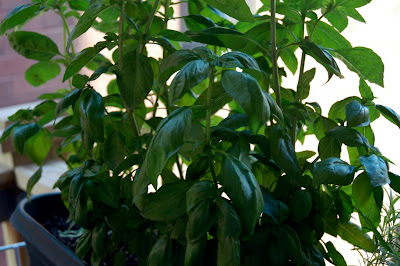
- Mistake 4: Not cutting early and often. It may seem like your puny little plant just isn't ready for a trip to the barber, but then you will find yourself sitting there wishing for leaves without much success. Again, basil is a great herb to practice pruning. As with all herbs, you want to cut the herb just above a set of growing leaves. If you don’t trim basil aggressively, it will continue to grow straight up, and become too tall and top-heavy. Making your first trim approximately 3-4” above the soil produces a nice sturdy plant.
- Mistake 5: Taking the leaves from the wrong place. Leave those large tough old leaves at the bottom alone. They are the solar panels that power your herb's growth. Once your plant is big enough to sustain a decent harvest, keep on taking from the top, as you have been when you were pruning. That way you get all those tender new herbs that are so tasty, and your plant gets to keep its well developed solar power system in place.
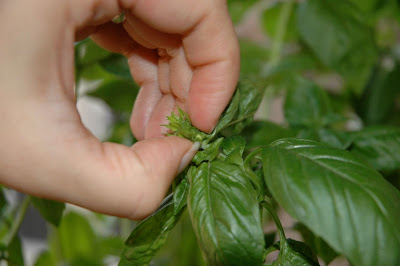
- Mistake 6: Letting your plants get too randy. If you are pruning regularly, this may never become an issue, but unless you are growing something for its edible flowers, be sure to cut back herbs before they start growing flowers. If you want leaves, keep cutting off the little flower buds whenever you find them, and it will encourage your plant to focus on growing more leaves.
- Mistake 7: Using tired soil with no nutrients. Tired soil that has been sitting in your garden or lawn for ages often looks grey and a little depressing. Would you want to grow in that stuff? Give your plants a dose of the good stuff and they'll thank you for it. I grow my herbs in a combination of potting soil, used coffee grounds, and egg shells. If I have some on hand, I also throw in crushed egg shells.
- Mistake 8: Getting in a rut. In order to be good at herb gardening, you need to feel rewarded. So don't stick too long with one or two herbs just because they work. Branch out to a few other basic herbs that you will use regularly in your kitchen. Once you have become comfortable with basil, I recommend moving on to try growing oregano, mint, rosemary and thyme. All are useful herbs in the kitchen, and all are relatively easy to grow.
- Mistake 9: You mean there's more than one kind of mint?When choosing herbs, read the label carefully. For example, there are two main varieties of oregano: Mediterranean and Mexican. Mediterranean oregano is the more common variety, and what you likely own if you have conventional dried oregano in your cupboard. I have Mexican (hot and spicy) oregano growing in my garden. I love Mexican oregano in spicy dishes, for making beans from scratch, and often use it in tomato dishes where I don't want the flavor to seem too much like marinara. Similarly, there are many different kinds of mint. You don't want to be thinking of the pungent spearmint plant and accidentally take home the much more subtle (and not mojito savvy) applemint by mistake.
- Mistake 10: Feed me Seymour! If you are planting in soil instead of pots, take care that your cute little herb seedling doesn't become a giant plant that takes over your garden. A word of warning for oregano and mint: both can be voracious growers.

The source of this article can be found here.
Until next time....
XOXOXOXOXO


No comments:
Post a Comment